A small devboard for testing esphome #
I wanted to build my own smart devices eg. air quality sensor, led strip controller, fan controller, …
So i build a devboard with almost all capability’s thar i wanted without needing to solder anything after the fact.
Learn more about ESPHome
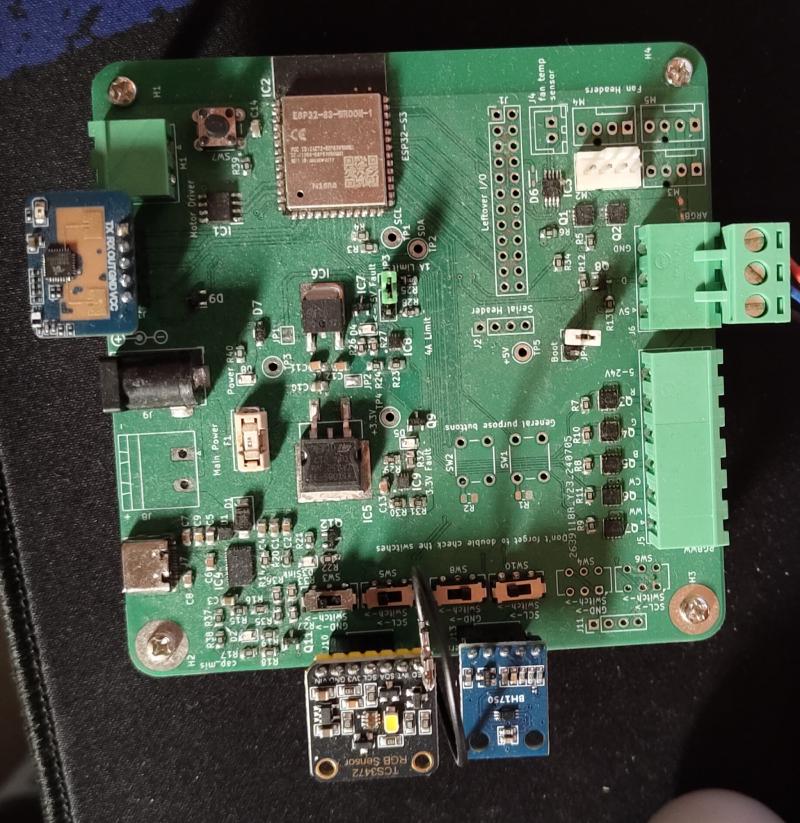
The board #
Schematic #
full schematic can be found here.
controller #
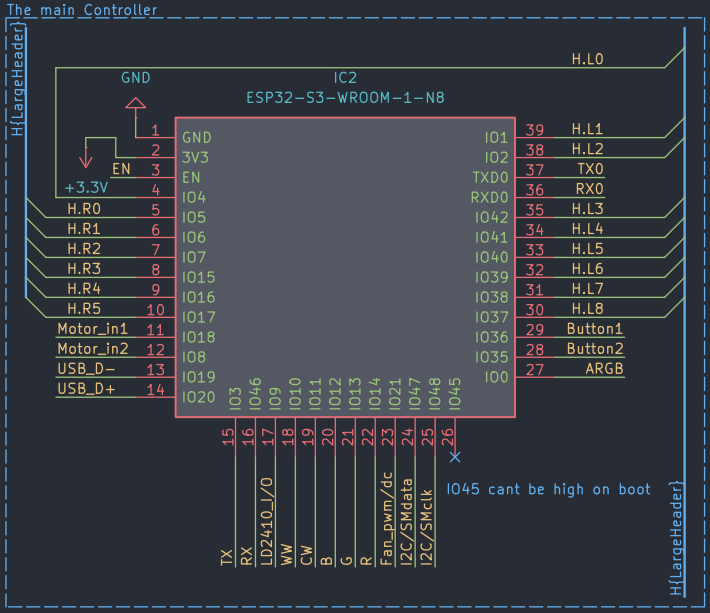
ESPHome is a framework for connected micro-controllers, mainly esp32. So i started with an esp32-S3 the most powerful of the available chips.
power #
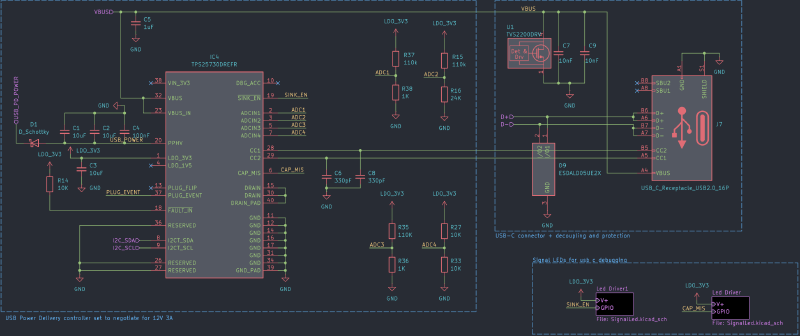
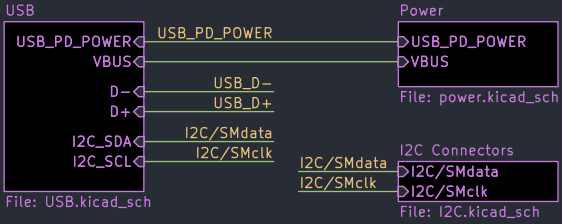
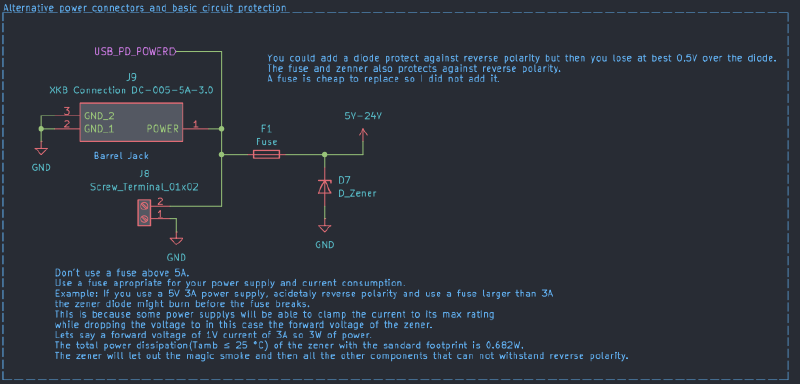
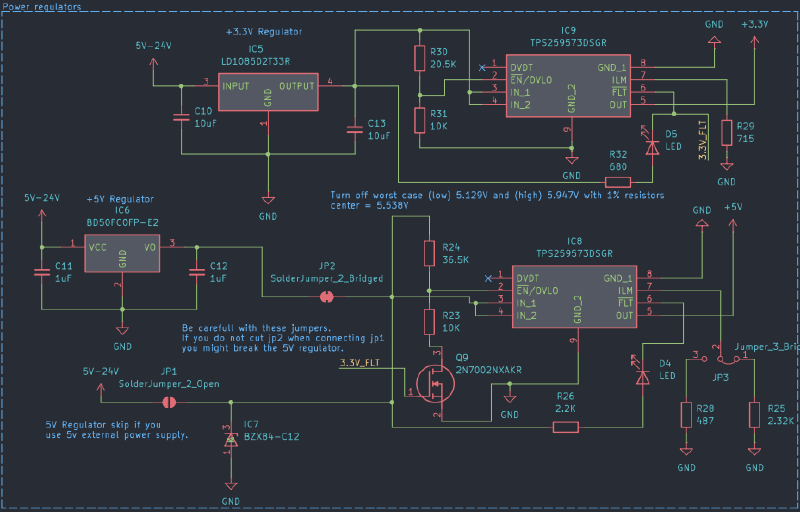
power is one of the more complicated parts. you can power it with usd-c or barrel jack, 5v to 20v. and the usb-c port can also be used to debug and program. the power rails are protected with electronic fuses. A devboard needs good protections against mistakes in my opinion. in this version the usb-c port is configured to ask for 12v 5a. But it will accept less. There is also a jumper to skip the 5v regulator and one to change the power limit on the 5v rail if you want to use a 5V power supply whit a larger current rating. For protection there is also a fuse for the power-supply and tvs diodes for esd on the power inputs and usb lines.(I forgot to put tvs diodes on the cc lines in this design)
sensor connectors #
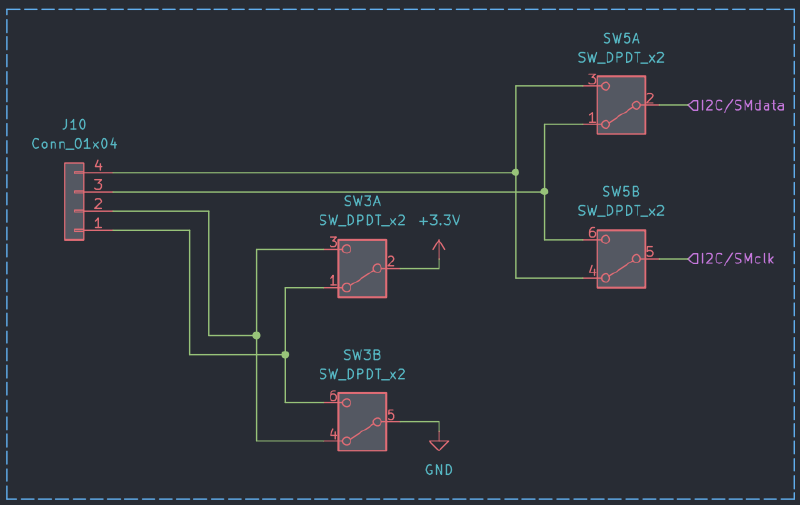
most cheap sensor modules use a common but inconsistent pin arrangement. For example:
| 1 | 2 | 3 | 4 |
|---|---|---|---|
| 3.3v | gnd | sda | scl |
But the pins often are flipped. so I made a system to flip the pins with switches.
fan controller #
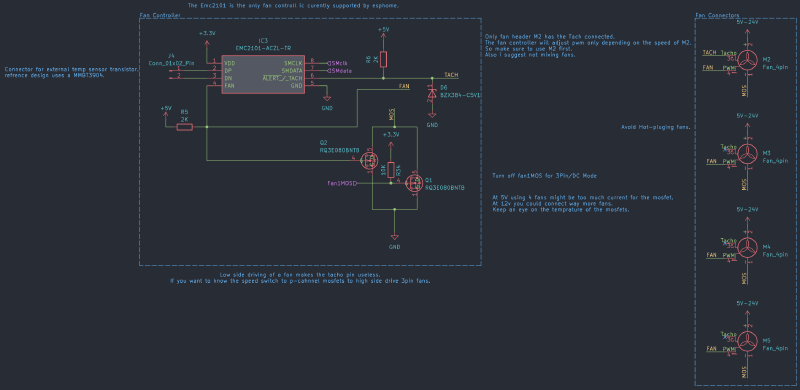
For this I used a fan controller with the ability to control 4 and 3 pin fans.
I ended up not liking this part because the fan controller chip was way too fragile and the implementation to protect it was way more complicated than just a p-channel mosfet for hi side driving 3 pin fans and level shifters for the tach and pwm pins. i already made a fan controller design that does not use this chip. see fan controller (link coming soon)
rgb leds #
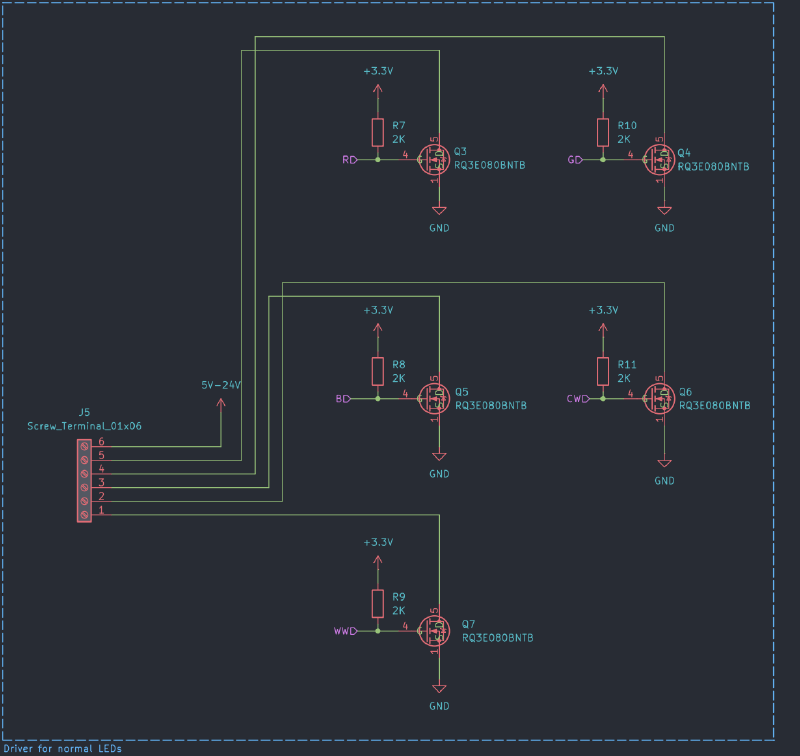
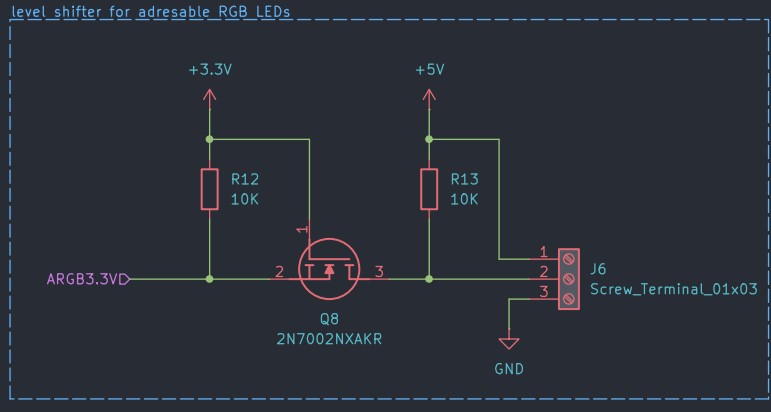
Nothing fancy here just some mosfets for basic rgbww and a level shifter for 5v addressable leds.
There should be a resistor to limit the gate capacitance discharge. There is serious voltage spikes now from switching the mosfets off too fast.
motor driver #
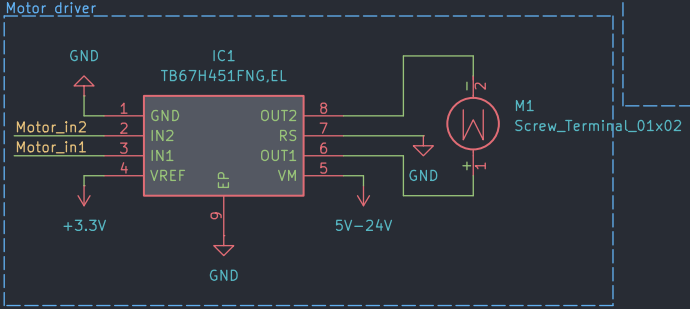
A simple motor driver ic does the trick.
dedicated connector for ld2410 #
The ld2410 is a presence detection sensor i wanted to try but the module being sold use 5v for power an uart for communication so the sensor connectors were not usable for this one.
buttons #
A reset button an 2 more buttons because i had space(never soldered).